
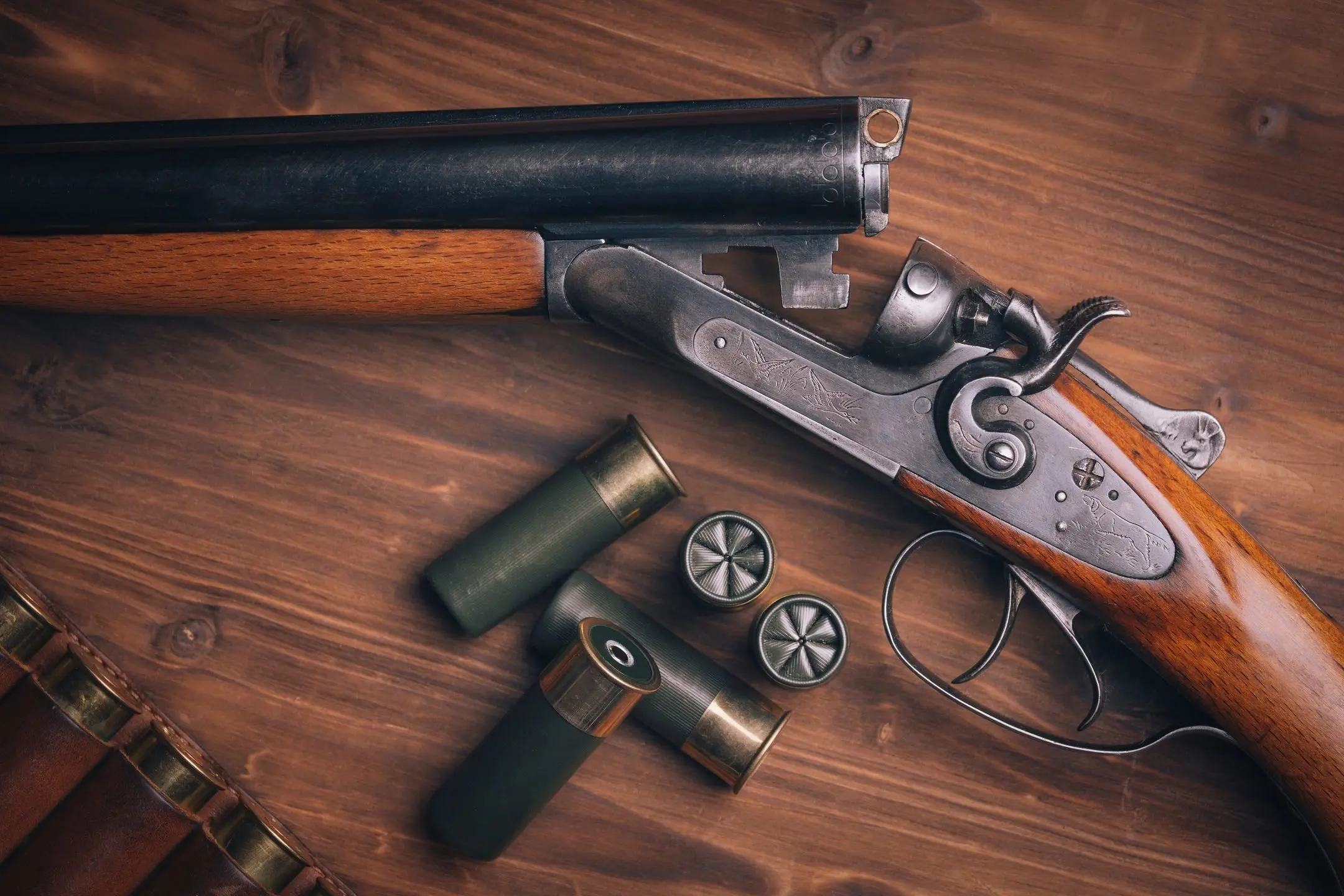
Guns in the Estate: Why California Makes Inheriting a Firearm So Complicated
And what a fiduciary’s Firearm Safety Certificate has to do with it
Most assets in an estate — bank accounts, real property, a car — follow predictable rules. Firearms do not. In California they are one of the most heavily regulated forms of property a decedent can leave behind, and the people who get caught off guard are usually the ones trying to do the right thing: an executor who hands a rifle to the decedent’s son, a trustee who stores a handgun in a safe during administration, a family that splits up a collection “because Dad wanted it that way.” Each of those well-meaning acts can carry criminal exposure if it is done outside the statutory path.
This post walks through how firearms move through a California trust or estate, where the traps are, and why a professional fiduciary holding a valid Firearm Safety Certificate matters to the administration.
1. Why firearms are different
California’s baseline rule is that a firearm transfer between two private parties must go through a California-licensed dealer (an FFL), who reports the transaction to the Department of Justice and runs a background check. Estate and trust administration does not get a blanket exemption from firearms law — it gets a narrow, conditional one. The penalties for getting it wrong fall on the fiduciary personally, not just the estate, and can include misdemeanor liability. That is why this asset class deserves its own checklist rather than being folded into routine distribution.
2. The “operation of law” pathway
California Penal Code §16990 recognizes that certain people receive firearms “by operation of law” rather than by a voluntary sale. The statute’s list expressly includes the executor, personal representative, or administrator of an estate when the estate includes a firearm, as well as a trustee in bankruptcy and certain secured creditors and receivers. Reading §16990 together with §27920, a person who takes title or possession this way may do so in lieu of going through a dealer — but only if that person is at least 18 and holds a valid Firearm Safety Certificate (FSC). The person taking possession must then file a Report of Operation of Law with the DOJ within 30 days of taking possession.
Note on scope: Penal Code §16990 lists “executor, personal representative, or administrator” and “trustee in bankruptcy” explicitly. The application of the operation-of-law pathway to a non-bankruptcy private trustee administering a revocable living trust is the kind of detail that should be confirmed against the current statute and DOJ guidance for the specific facts, rather than assumed. Flagging it here rather than glossing over it.
3. The forms and the deadline
The operating document is the DOJ’s Report of Operation of Law or Intra-Familial Firearm Transaction, form BOF 4544A. Practical points that trip people up:
- The report is generally due within 30 days of the person taking possession of the firearm.
- A processing fee (commonly stated as $19) accompanies the report; confirm the current fee before filing.
- The form can be submitted on paper or through the California Firearms Application Reporting System (CFARS).
- The BOF 4544A cannot be used to report “assault weapons,” and additional forms are needed when more than two firearms are involved.
- Handgun transfers during administration may trigger their own DOJ reporting — not only for the ultimate beneficiary but potentially for the fiduciary holding the firearm during administration. Verify the current handgun-reporting requirements for the specific situation.
4. The four practical paths — at a glance
How a firearm leaves an estate depends on the type of firearm, who is receiving it, and that person’s eligibility. The table summarizes the common routes.
| Path | How it works | Key requirement / caution |
| Operation of law (PC §16990 / §27920) | Executor, administrator, or trustee takes title or possession during administration without using a dealer. | The fiduciary taking possession must hold a valid Firearm Safety Certificate. A Report of Operation of Law is required within 30 days of taking possession. |
| Distribution to a beneficiary | Firearm passes to the named or intestate heir at the close of administration. | Beneficiary must not be a prohibited person and, for a handgun, generally must hold an FSC. A separate operation-of-law / intra-familial report (BOF 4544A) and the $19 fee apply. |
| Transfer through an FFL | Firearm routed through a licensed dealer who runs the background check. | Used when no exemption applies, when the recipient’s eligibility is uncertain, or as a deliberate way to obtain a DOJ background check on the recipient. |
| Restricted / NFA items | “Assault weapons,” .50 BMG rifles, short-barreled rifles/shotguns, suppressors, machine guns. | Cannot simply be inherited. Require special handling, ATF approval for NFA items, surrender, or removal from state. Verify current rules before acting — deadlines and categories change. |
Statutory references in the table are starting points, not a substitute for checking the current code section and DOJ form instructions before acting.
5. Eligibility: the step most people skip
Before any firearm changes hands, the fiduciary has to satisfy themselves that the recipient is not a prohibited person under California and federal law. Prohibiting categories include certain criminal convictions, specified mental-health adjudications, certain restraining orders, and unlawful drug use, among others. A fiduciary may recommend — but generally may not compel — that a beneficiary submit a Personal Firearms Eligibility Check to the DOJ. When eligibility is genuinely uncertain, routing the transfer through an FFL is often the cleaner choice precisely because the dealer runs the background check as part of the process.
For handguns, the recipient generally needs a valid Firearm Safety Certificate of their own. A beneficiary who is enthusiastic about inheriting Grandpa’s pistol but does not yet hold an FSC cannot simply be handed the gun.
6. The items that cannot just be inherited
Some firearms sit outside the ordinary inheritance pathways entirely:
- “Assault weapons” and .50 BMG rifles are subject to special restrictions and generally cannot be transferred by ordinary inheritance — they may need to be surrendered, rendered inoperable, sold to a dealer, or removed from the state. Specific options and any deadline should be verified against the current statute.
- National Firearms Act (Title II) items — short-barreled rifles and shotguns, suppressors, machine guns — require federal ATF approval in addition to California compliance.
- Older, unregistered, or undocumented firearms raise their own questions about status and reporting that should be resolved before, not after, distribution.
This is the category where a misstep is most costly, and where coordinating with firearms counsel is not optional.
7. Gun trusts and planning ahead
For clients with significant collections or NFA items, a dedicated gun trust is a common planning tool. Properly drafted, it can keep firearms out of probate, set out who may possess and use them, and reduce the chance that a well-intentioned successor inadvertently breaks the law. A gun trust is drafted by counsel — it is part of the estate plan, not something a fiduciary improvises during administration — but knowing one exists changes how the firearms in an estate should be handled.
8. Where the fiduciary’s FSC fits in
Here is the practical reason this matters for an administration. When a decedent leaves firearms, somebody lawful has to take custody of them — to secure them, inventory them, and hold them while the estate or trust is administered and the right recipients are identified and cleared. Under the operation-of-law pathway, the fiduciary who takes that possession needs to hold a valid Firearm Safety Certificate to do so without immediately routing every gun through a dealer.
Tom LaVoie, the Licensed Professional Fiduciary behind Pride Trust Services, now holds a valid California Firearm Safety Certificate. In plain terms, that means an estate or trust that includes firearms can be administered without the fiduciary being the weak link in the chain of custody — the guns can be lawfully secured during administration, the operation-of-law reporting can be handled on time, and eligibility and transfer decisions can be coordinated with firearms counsel where the facts call for it. It does not turn a fiduciary into a firearms dealer, a firearms lawyer, or an FFL, and complex or restricted items will still be referred to the right specialist.
9. A short checklist for a fiduciary facing firearms
- Secure every firearm immediately and safely; do not distribute anything yet.
- Inventory each item — make, model, serial number, type, and registration status.
- Classify each item: handgun, long gun, or restricted / NFA item.
- Confirm the recipient is not a prohibited person, and that any handgun recipient holds an FSC.
- Choose the lawful path: operation of law, distribution, FFL transfer, or special handling for restricted items.
- File the required DOJ report(s) within the applicable deadline (commonly 30 days for operation-of-law transfers).
- Document everything, and involve firearms counsel for anything restricted, unusual, or uncertain.
Talk to a professional fiduciary
If you are administering a California estate or trust that includes firearms — or planning ahead for a collection you want passed on cleanly — Pride Trust Services can help coordinate the administration and the chain of custody, and work alongside your firearms counsel where specialized legal advice is required.
Pride Trust Services — Tom LaVoie, California Licensed Professional Fiduciary (CLPF #1487). Call (800) 749-8466 or visit PrideTrustServices.com.
Disclaimer: This article is general information about California law as of its writing and is not legal, tax, or fiduciary advice for any specific matter. California and federal firearms statutes, DOJ forms, fees, and deadlines change, and the rules that apply depend on the specific firearm, the parties, and the facts. Confirm current statutory citations, DOJ form instructions, and any restricted-weapon deadlines before acting, and consult qualified firearms counsel for restricted, NFA, or uncertain items. Pride Trust Services provides fiduciary services and does not practice law.